
Did You Know Portugal Has Over 5,000 Cemeteries?
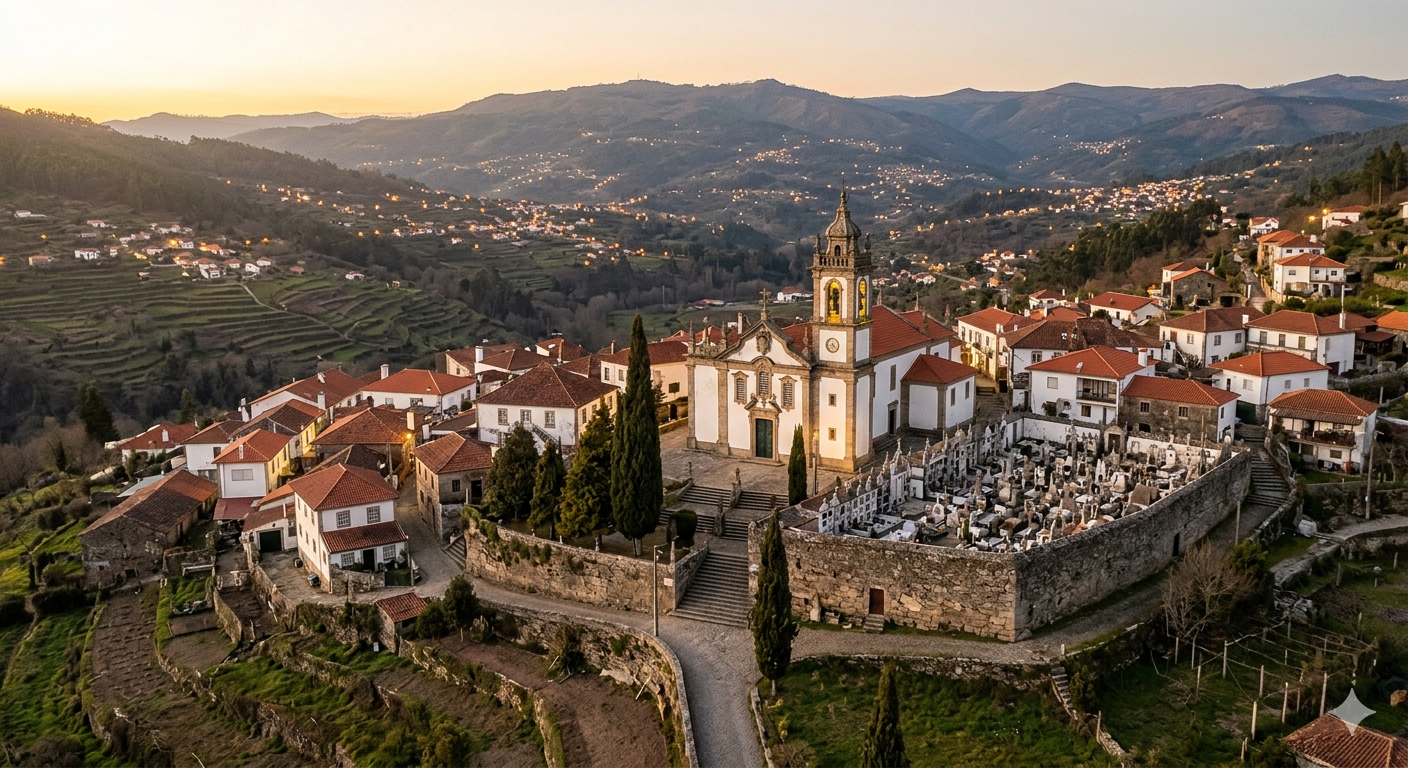
Portugal is a small country — but one with a very particular relationship with memory and tradition. A number that surprises almost everyone who hears it for the first time illustrates this perfectly: there are more than 5,000 cemeteries spread across the national territory.
To put that figure into perspective: over 5,000 burial sites for around 10 million inhabitants — placing Portugal among the European countries with the highest number of cemeteries per capita.
But why so many? The answer lies in history. For centuries, every village and every parish built its own burial ground, usually beside the local parish church. A reform in 1836 made civil cemeteries mandatory, and each of Portugal's more than 3,000 parishes established its own. The result is visible to this day: a dense network of memorial spaces covering the country from end to end.
💡 With over 5,000 cemeteries for roughly 10 million inhabitants, Portugal averages 1 cemetery for every 2,000 people.
How Are They Distributed Across the Country?
North
This is the region with the highest concentration of cemeteries in Portugal. With over 1,400 parishes, the Minho, Douro, and Trás-os-Montes areas have a strong community tradition — and virtually every village has its own burial ground. The North is estimated to hold around 40% of all cemeteries in the country.
Centre
The Centre Region, with its vast interior, also has a high cemetery density. Districts such as Guarda, Castelo Branco, and Viseu stand out for their many small rural cemeteries — many of them a reflection of the communities that still preserve them with care today.
Lisbon and Tagus Valley
In this region, the number of cemeteries is smaller, but their scale is far greater. Prazeres Cemetery, inaugurated in 1833, and Alto de São João Cemetery are among the largest in the country, holding central figures of Portuguese history and culture.
Alentejo
Portugal's largest region by area is also one of its least populated. Even so, it maintains an extensive network of municipal and parish cemeteries — many with more available space than demand, a reflection of a region that is ageing and seeing its population gradually decline.
Algarve
With fewer parishes than the inland regions, the Algarve has the lowest cemetery density on the mainland. One notable detail: Algarve cemeteries frequently receive foreign nationals who spent their final years in the region, making them genuinely multicultural spaces.
Azores and Madeira
The autonomous regions have their own cemeteries, with unique architectural characteristics shaped by geographic isolation and local traditions. Madeira is known for its family vaults in local granite; the Azores, with 9 islands and over 150 parishes, have an equally significant network of burial grounds.
📊 Note: The exact number of cemeteries by region is not centrally recorded in Portugal. The figures above are estimates based on parish counts per region and studies on the national funeral sector.
A Space That Deserves Care
With so many cemeteries spread across the country, there is one thing they all have in common: the importance of maintaining every grave and every vault with the respect it deserves.
At Casa das Campas, we handcraft funeral products built to last — in granite, marble, and other quality materials, made in Portugal with over 32 years of experience.
🏠 Explore our collection at casadascampas.pt — artisan products with delivery across the country.
